RADIAL PROTOCOL
Radial protocol values
Pressure: 2 bar
Pulses: 2000 (on the spastic muscle)
Frequency: 8–12 Hz
Applicator: 15 mm
Total Energy Flux Density Dose Sum (mJ/mm²): 206 mJ/mm²
Number of Sessions: 3 (1 session per week)
Medical Information
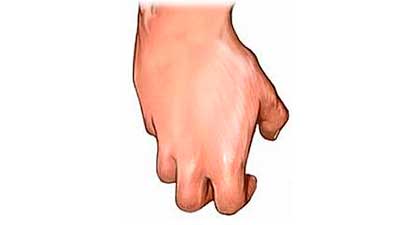
Spasticity is a motor disorder of the nervous system in which certain muscles remain permanently contracted. This contraction causes muscle stiffness and shortening, interfering with different movements and functions such as walking, handling objects, balance, speech, and swallowing.
Spasticity is usually caused by damage to the areas of the brain or spinal cord responsible for controlling voluntary muscle activity. It is commonly associated with brain or spinal cord injuries, multiple sclerosis, cerebral palsy, hypoxia, stroke, Tay-Sachs disease, and certain metabolic disorders such as adrenoleukodystrophy or phenylketonuria. It is typically characterized by hypertonia (increased muscle tone), cramps (rapid contractions without noticeable movement), spasms (contractions accompanied by movement), and hyperreflexia of the deep tendons (exaggerated reflex responses). The severity of spasticity can range from mild muscle stiffness to severe, painful, and uncontrollable muscle spasms.
Non-Pharmacological Treatment
Rehabilitation: stretching and muscle mobility physiotherapy, cryotherapy, occupational therapy, orthopedic measures, transcutaneous electrical stimulation, and, as a last resort, surgery aimed at releasing tendons, muscle or myofascial contractures (gradual fibrotomy), or nerve pathways (rhizotomy).
There is currently evidence suggesting that the application of radial shock waves may contribute to muscle relaxation in patients with spasticity. Radial Shock Wave Therapy (RSWT®) is considered an effective method for reducing spastic muscle tension. Recent studies indicate that its effectiveness may be comparable to or greater than that of botulinum toxin injections. We recommend reviewing the following studies.
STUDIES
Radial extracorporeal shock wave therapy (rESWT) in the treatment of spasticity in cerebral palsy: A randomized, placebo-controlled clinical trial.
Xavier, Antonio Morral, Lluís Costa and Miriam Tura
Cerebral Palsy Association (ASPACE), Centre Pilot Arcangel Sant Gabriel, Barcelona, Spain.
Blanquerna School of Health Science, Universitat Ramon Llull, Barcelona, Spain.
Extracorporeal shock wave treatment can selectively destroy end plates in neuromuscular junctions.
Muscle Nerve. 2018 Mar;57(3):466-472. doi: 10.1002/mus.25754. Epub 2017 Aug 8.
FOCAL PROTOCOL
Focal protocol values
Penetration depth: according to the depth of the spastic muscle (ultrasound-guided assessment).
Total energy flux density per shock wave emission: 0.07–0.25 mJ/mm² (recommended: 0.10 mJ/mm²).
Number of sessions: 1 session per week (for 3 consecutive weeks).
Frequency: 8 Hz
Pulses: 1000 to 1500 pulses per spastic muscle (antagonist muscles are not treated).