Osgood-Schlatter disease
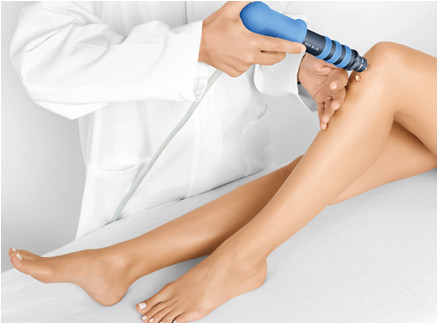
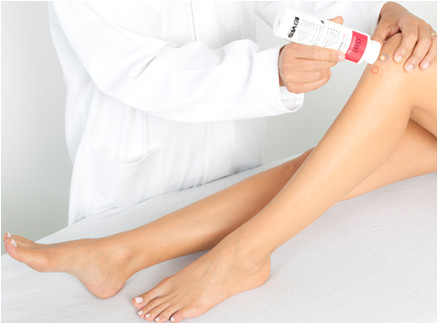
RADIAL PROTOCOL
Radial protocol values
Pressure: 2 bar
Impulses: 3,000
Frequency: 10–12 Hz
Applicator: 15 mm
Total energy flux density dose sum (mJ/mm²): 154 mJ/mm²
Number of sessions: 3 (1 per week)
Medical information
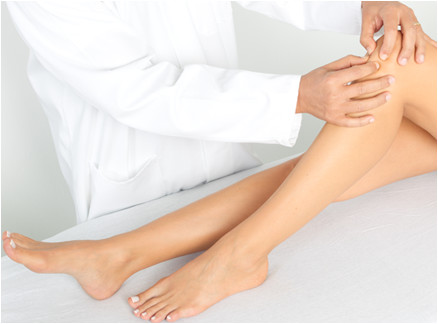
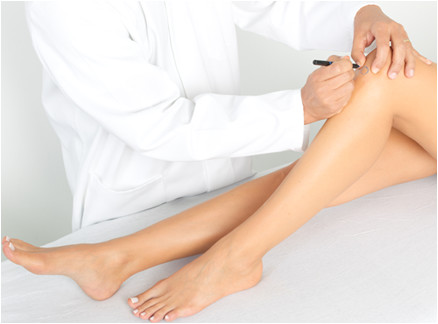
Osgood-Schlatter disease (OSD) involves the tibial tuberosity in growing children. The condition is characterized by localized pain, swelling, and tenderness of the tuberosity.
OSD is believed to result from repetitive strain and chronic avulsion of the secondary ossification center of the tibial tuberosity, meaning small injuries caused by repetitive overuse before the growth area has fully matured. The repetitive strain is due to the strong traction exerted by the quadriceps muscle during sports activities, particularly running, jumping, and climbing. Consequently, OSD is common among adolescents who play football, basketball, volleyball, and among gymnasts.
The avulsed tibial tuberosity continues to grow, ossify, and enlarge. The affected area may become fibrous, creating a localized non-union, or it may show complete bony union with a slight enlargement of the tibial tuberosity. In either case, the result is a traction apophysitis of the tibial tubercle.
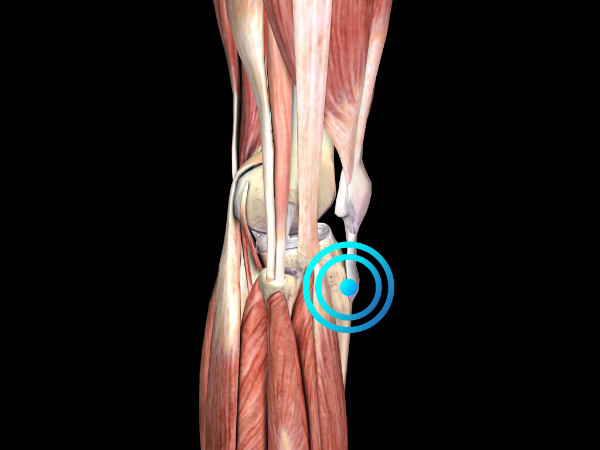
The condition is diagnosed based on its clinical symptoms and imaging studies. In particular, in unilateral cases of OSD, plain knee radiographs are recommended to rule out other conditions such as an acute tibial epiphyseal fracture, infection, or tumor. The true incidence of OSD remains unknown.
The most common age range is between 12 and 15 years in boys and between 8 and 12 years in girls, coinciding with periods of rapid growth. The incidence is higher in boys than in girls (approximately a 3:1 ratio). Between 20% and 30% of OSD cases are bilateral.
Treatment of OSD should begin with conservative management measures such as rest, ice application, activity modification, and rehabilitation exercises. Patients who do not respond to conservative treatment within six months (approximately 10%) may be considered for radial extracorporeal shock wave therapy (rESWT®). Surgery should be considered in the most persistent cases of OSD in skeletally mature patients, with the aim of surgically removing bone formation (in cases of localized non-union) and/or loose cartilaginous material.
STUDIES
Titov VV, Litvinenko A Extracorporeal shock wave therapy in the treatment of the osteochondropathy of tibial bone roughness. Abstracts 10th International Congress of the International Society for Musculoskeletal Shock Wave Therapy, Toronto, Canada, 2007, pp. 46-47