

RADIAL PROTOCOL
Radial protocol values
Pressure (bar): 2.5 bar
Pulses: 2,000
Frequency: 10–12 Hz
Applicator: 15 mm
Total energy flux density dose: 166 mJ/mm²
Number of sessions: 3 (1 per week)
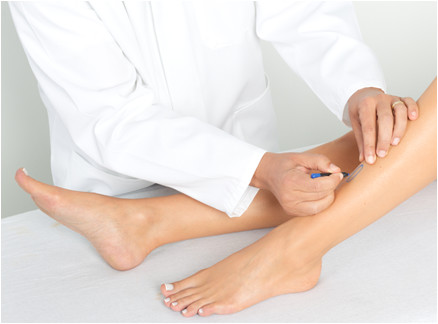
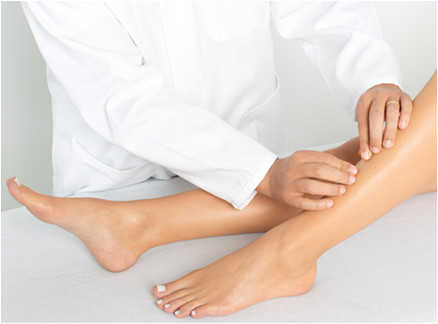
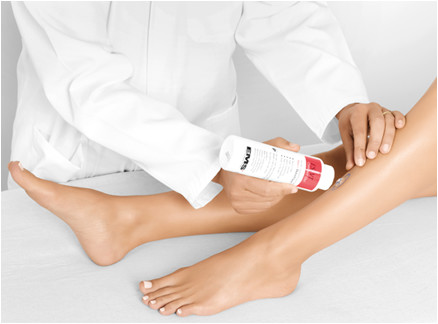
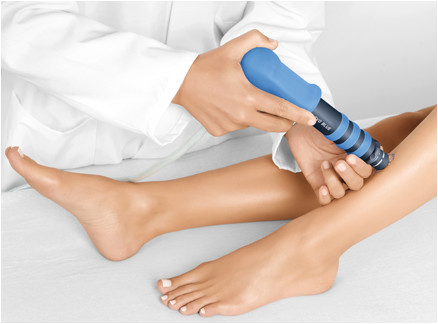
Medical Information
Medial tibial stress syndrome (MTSS), more commonly known as “shin splints,” is a frequent injury caused by overuse or repetitive stress affecting the lower extremities.
This condition is one of the most common causes of exercise-induced leg pain in athletes and typically presents as diffuse pain along the middle/distal third of the tibia. MTSS initially develops with pain characterized by: (I) worsening at the beginning of exercise, (II) gradually decreasing throughout training, and (III) disappearing within minutes after exercise. At later stages, the pain may occur with less activity and can even be present at rest. This condition is diagnosed based on its clinical symptoms.
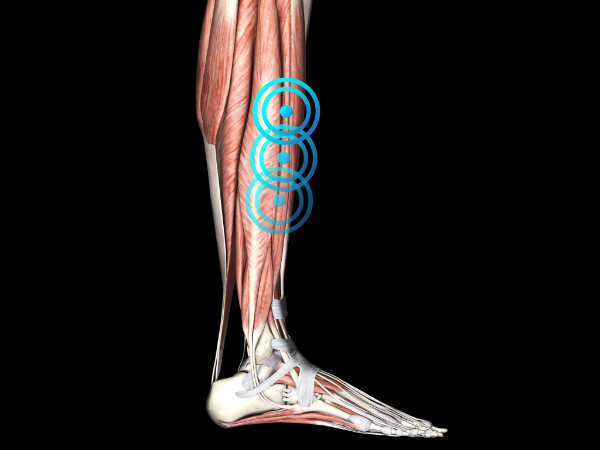
Imaging studies should be used to rule out other causes of exercise-induced leg pain or to confirm the diagnosis of MTSS when there is uncertainty.
The factors most commonly associated with MTSS appear to be training errors (“too much, too fast”). This condition is more frequently observed in runners, football and basketball players, as well as dancers. It should be noted that MTSS is almost always associated with biomechanical abnormalities of the lower extremities, including knee abnormalities, tibial torsion, femoral anteversion, abnormalities of the foot arch, or leg length discrepancy. However, inappropriate footwear (including wear-related deterioration) may also contribute to the development of shin pain. Several tibial stress-related injuries may contribute to MTSS, including tendinopathies, periostitis, and dysfunction of the tibialis posterior, tibialis anterior, and soleus muscles. Women appear to be more affected than men and are three times more likely to progress from MTSS to a stress fracture.
Treatment of MTSS should begin with rest and ice application during the acute phase, followed by low-impact exercise and cross-training throughout rehabilitation, together with a modified training program (reduced intensity, frequency, and duration, regular stretching and strengthening exercises, and the use of appropriate footwear providing adequate cushioning). Orthotics, manual therapy, and injections may also help relieve symptoms. Patients who do not respond to conservative treatment within six months may undergo radial shock wave therapy (rSWT®). In more persistent cases of MTSS, surgery should also be considered.
STUDIES
Rompe JD, Caccio A, Furia JP, et al. Low-energy extracorporeal shock wave as a treatment for medial tibial stress syndrome. Am J Sports Med 2010 Jan; 38(1):125-32. Epub 2009 Sep 23. Refer to the study.
FOCAL PROTOCOL
Focal protocol values
Penetration depth: 5–10 mm
Total energy flux density per shock wave emission: 0.089–0.271 mJ/mm²
Number of sessions: 3–5 (at intervals of 5–14 days)
Frequency: 8 Hz
Pulses: 2,000–2,500
Medical Information
Medial tibial stress syndrome is a chronic pain condition affecting the tibia and may radiate along the entire length of the bone. Tibial stress syndrome is commonly reported in athletes participating in sports that require frequent sudden starts and stops. Runners may also be affected by tibial stress syndrome. The pain is generally caused by irritation of the tibialis anterior tendon due to acute or chronic overuse.
Pain may result from both inflamed tendons and myofascial trigger points in the tibialis anterior muscle.
The use of focused shock wave applications has been described in the literature as a useful adjunct to conventional therapies.
STUDIES
Korakakis V, Whiteley R, Tzavara A, Malliaropoulos N. The effectiveness of extracorporeal shockwave therapy in common lower limb conditions: a systematic review including quantification of patient-rated pain reduction. Br J Sports Med. 2017 Sep 27. pii: bjsports- 2016-097347. doi: 10.1136/bjsports-2016-097347.
Gomez Garcia S, Ramon Rona S, Gomez Tinoco MC, Benet Rodriguez M, Chaustre Ruiz DM, Cardenas Letrado FP, Lopez-Illescas Ruiz Á, Alarcon Garcia JM. Shockwave treatment for medial tibial stress syndrome in military cadets: a single-blind randomized controlled trial. Int J Surg.2017 Oct; 46:102-109
Winters M1 , Eskes M, Weir A, Moen MH, Backx FJ, Bakker EW. Treatment of medial tibial stress syndrome: a systematic review. Sports Med. 2013 Dec;43(12):1315-33.
Moen MH1 , Rayer S, Schipper M, Schmikli S, Weir A, Tol JL, Backx FJ. Shockwave treatment for medial tibial stress syndrome in athletes; a prospective controlled study.Br J Sports Med. 2012 Mar;46(4):253-7.
Reshef N1 , Guelich DR. Medial tibial stress syndrome. Clin Sports Med. 2012 Apr;31(2):273-90.
H Steere, S DeLuca, J Borg-Stein, G Malanga, Adam S Tenforde, A Narrative Review Evaluating Extracorporeal Shockwave Therapy as a Potential Regenerative Treatment for Musculoskeletal Conditions in Military Personnel Military Medicine, Volume 186, Issue 7-8, July-August 2021, Pages 682-706.