

RADIAL PROTOCOL
Radial Protocol Values
Pressure: 3 bar
Impulses: 2,000
Frequency: 10–12 Hz
Applicator: 36 mm
Total energy: 46 mJ/mm²
Number of sessions: 3 (1 per week)
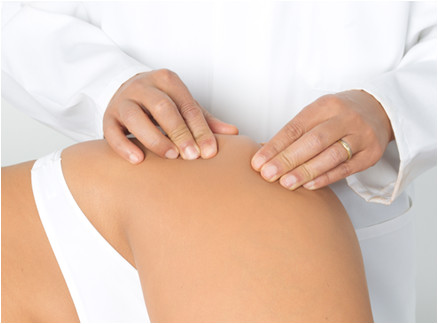
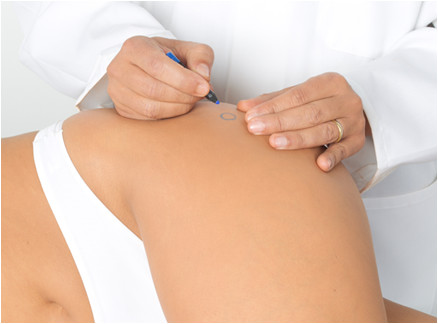
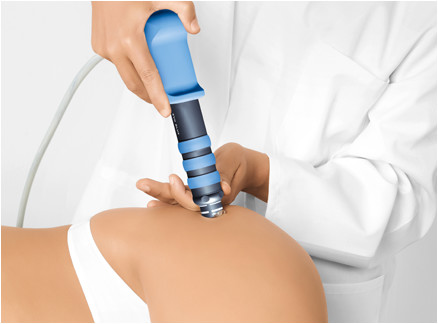
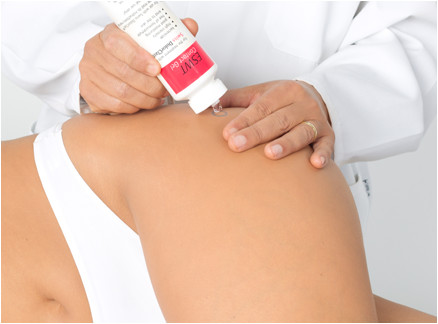
Medical Information
Greater trochanteric pain syndrome refers to a range of disorders affecting the lateral peritrochanteric space of the hip, including tendinopathies of the gluteus medius and minimus muscles, trochanteric bursitis, and snapping hip syndrome.
The main clinical symptoms are pain and reproducible tenderness in the area of the greater trochanter and/or in the buttock or lateral thigh. This condition is diagnosed based on clinical symptoms. Imaging studies should be used to rule out other causes of hip pain or to confirm the diagnosis of greater trochanteric pain syndrome when there is diagnostic uncertainty.
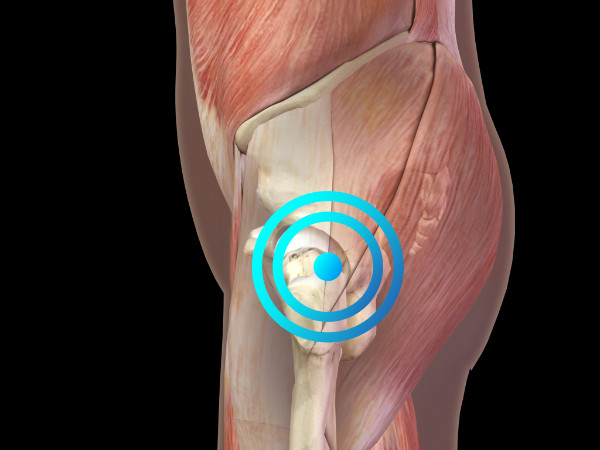
The greater trochanter serves as the attachment site for the tendons of five muscles: laterally, the gluteus medius and gluteus minimus, and medially, the internal and external piriformis muscles. Similar to the shoulder, injuries and subsequent degeneration of the components of the hip rotator cuff may occur, beginning with tendinitis, progressing to tendinosis, and potentially leading to tendon tears. This process occurs more frequently in the gluteus medius than in the gluteus minimus.
In addition, there are three synovial bursae surrounding the lateral aspect of the greater trochanter: the bursae located beneath the gluteus maximus and gluteus medius, and the bursa of the gluteus minimus. These synovial bursae are believed to cushion the gluteal tendons, the iliotibial band, and the tensor fasciae latae muscle. Trochanteric bursitis most commonly develops secondary to repetitive friction between the greater trochanter and the iliotibial band due to hip flexion and extension movements. Furthermore, trochanteric bursitis is often associated with overuse, trauma, and other conditions that may alter a person’s normal gait.
Greater trochanteric pain syndrome has been reported to affect between 10% and 25% of the population, with a higher incidence in women than in men.
Treatment of tendinopathies in the gluteal region includes rest, anti-inflammatory medication, and physiotherapy focused on strengthening exercises and mobility improvement. Trochanteric bursitis is often disabling and typically responds to rest, ice application, anti-inflammatory medication, and physiotherapy focused on stretching, flexibility, strengthening, and gait re-education exercises. If symptoms persist, injections of local anaesthetics and corticosteroids into the bursae may provide effective pain relief.
Radial shockwave therapy (rESWT®) has demonstrated effectiveness in persistent cases of greater trochanteric pain syndrome. If rESWT® is not effective, surgical intervention should be considered in cases where other possible causes of the patient’s symptoms have been ruled out.
STUDIES
Rompe JD, Segal NA, Cacchio A, et al. Home training, local corticosteroid injection, or radial shock wave therapy for greater trochanter pain syndrome. Am J Sports Med 2009;37 1981-1990. Refer to the study.
Furia JP, Rompe JD, Maffulli N. Low-energy extracorporeal shock wave therapy as a treatment for greater trochanteric pain syndrome Am J Sports Med 2009;37:1806-1813. Refer to the study.
FOCAL PROTOCOL
Focal protocol values
Penetration depth: 30–60 mm
Total energy flux density per shockwave emission: 0.150–0.355 mJ/mm²
Number of sessions: 3–5 (at 7–14-day intervals)
Frequency: 8 Hz
Pulses: 2,000–2,500
Medical information
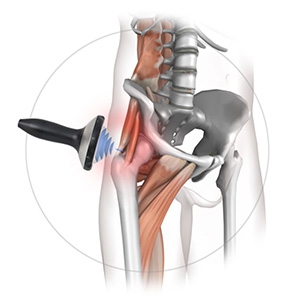
Greater trochanteric pain syndrome (trochanteric tendinitis) is characterized by chronic or intermittent acute pain in the area of the greater trochanter or radiating to adjacent regions around the hip and thigh. Precipitating factors are usually acute or chronic overload of the muscles and ligaments, particularly on the lateral side of the hip.
Excessive tension may lead to chronic inflammatory irritation in the trochanteric area. This typically presents as acute tenderness on palpation of the greater trochanter at the hip joint. In rare cases, imaging studies may reveal the presence of a “true” bursitis. Patients may experience pain during certain movements, and occasionally the pain radiates down the affected leg.
STUDIES
Furia JP, Rompe JD, Maffulli N. Low-energy extracorporeal shock wave therapy as a treatment for greater trochanteric pain syndrome. Am J Sports Med. 2009; 37:1806- 1813.
Mani-Babu S, Barton C, Morrissey D. The effectiveness and.dose-response relationship of extracorporeal shock wave therapy in lower limb tendinopathy: a systematic review. J Sci Med Sport. 2012; 15:133-134.
Reid D. The management of greater trochanteric pain syndrome: A systematic literature review. J Orthop. 2016 Mar; 13(1): 15-28.
Rompe JD, Segal NA, Cacchio A, Furia JP, Morral A, Maffulli N. Home training, local corticosteroid injection, or radial shock wave therapy for greater trochanter pain syndrome. Am J Sports Med. 2009; 37:1981-1990.
Shi Li-Jun et al. Focused extracorporeal shock wave therapy with centrifugal exercise for the treatment of greater trochanteric pain syndrome. Zhongguo Gu Shang. 2021 Dec 25;34(12):1158-64.
Ramon S et al. Focused Shockwave Treatment for Greater Trochanteric Pain Syndrome: A Multicenter, Randomized, Controlled Clinical Trial.... J Bone Joint Surg Am. 2020 Aug 5;102(15):1305-1311.
Carlisi E et al. Focused extracorporeal shock wave therapy for greater trochanteric pain syndrome with gluteal tendinopathy: a randomized controlled trial. Clin Rehabil. 2019 Apr;33(4):670-680.
Ganderton C et al. Demystifying the Clinical Diagnosis of Greater Trochanteric Pain Syndrome in Women. J Womens Health (Larchmt). 2017 Jun;26(6):633-643.