

RADIAL PROTOCOL
Radial protocol values
Pressure (bar): 1.5 bar
Pulses: 2000
Frequency (Hz): 10–12 Hz
Applicator (mm): 15 mm
Total Energy Flux Density Dose Sum (mJ/mm²): 40 mJ/mm²
Number of Sessions: 3 (1 session per week)
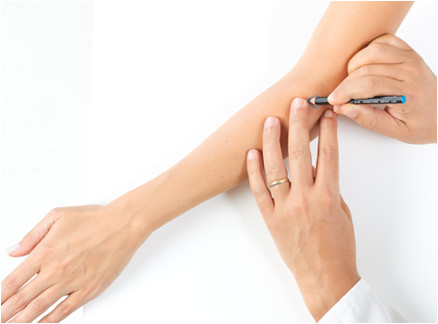
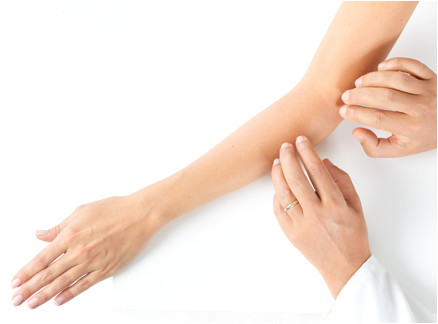
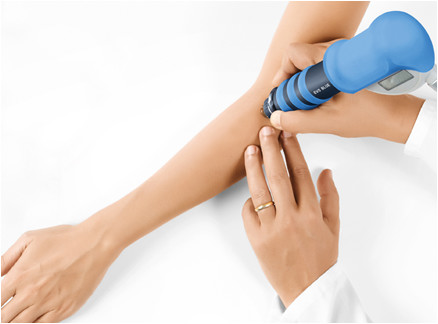
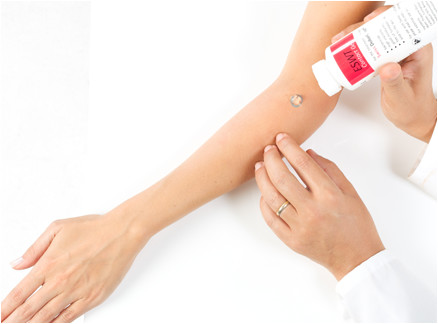
Medical Information
Tennis elbow is a tendinopathy affecting the lateral side of the elbow, at the origin of the common extensor tendon. In the past, this condition was commonly referred to as “lateral epicondylitis.” However, it is now considered a non-inflammatory pathology. Today, the most accurate description would be a “partially reversible, yet degenerative overuse/underuse tendinopathy.” Due to the complexity of this definition, the term “tennis elbow” is generally preferred.
The main clinical symptoms are pain during resisted movements (especially resistance against middle finger extension) and tenderness over the lateral epicondyle, with a normal elbow range of motion. This condition is diagnosed based on its clinical presentation. Imaging studies should be used to rule out other causes of elbow pain or to confirm the diagnosis of tennis elbow when there is diagnostic uncertainty.
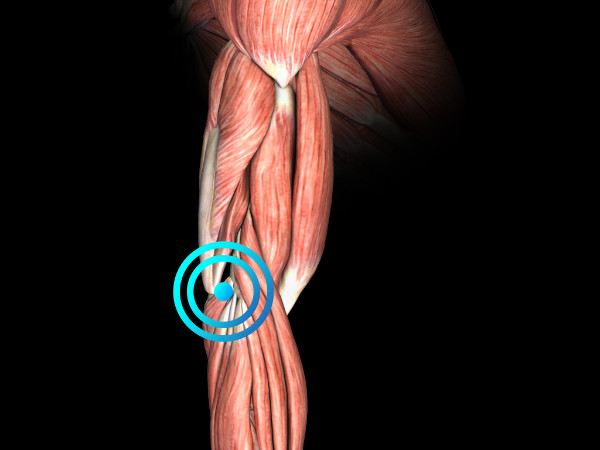
As with other tendinopathies, the pathology of tennis elbow is complex and not yet fully understood. Similar to calcific tendinopathy of the shoulder, repetitive overload may alter tendon structure, leading to degeneration at the origin of the common extensor tendon. However, calcifications are uncommon in tennis elbow. It has also been suggested that neurogenic inflammation may contribute to the development of this condition.
The prevalence in the general population is approximately 2%, with peak incidence occurring between 40 and 50 years of age. Around 40% of tennis players experience elbow problems, although only one quarter consider the symptoms to be disabling or severe. Importantly, most patients with tennis elbow do not play tennis. This is because many tennis players follow weekly training routines that regularly load the tendons and help maintain tendon health. In contrast, the condition often develops in individuals who have led a highly sedentary lifestyle for many years and then overload a previously underused and weakened tendon through activities such as gym training, gardening, or simply carrying heavy luggage. When the condition is related to tennis practice, it is typically associated with the backhand stroke, which places excessive stress on the tendons at the origin of the common extensor tendon.
Initial treatment should generally be conservative and include rest, physiotherapy, and non-steroidal anti-inflammatory medication. As with chronic Achilles tendinopathy and chronic plantar fasciopathy, eccentric exercises have become a cornerstone of rehabilitation programs for tennis elbow. An attractive alternative treatment option is Radial Shock Wave Therapy (RSWT®). In most cases, cortisone injections should be avoided. Although cortisone may provide very good short-term results (up to six weeks), it has been shown to be detrimental over the longer term (more than three months). When conservative treatment fails, surgery should be considered.
STUDIES
Krischnek O, Hopf C, Nate b, et al. Shock-wave therapy for tennis and golfers’s elbow – 1 year follow up. Arch Orthop Trauma Surg 1999; 62-66. Refer to the study.
Söller F.
Die radiale Stosswellentherapie bei der Epikondylitis humeri radialis – kurz- und mittelfristige Ergebniss. In: Maier M, Gillesberger F: Abstracts 2003 zur Muskuloskelettalen Stosswellentherapie. Norderstedt 2003; 121-122. Refer to the study.
Spacca G, Necozione S, Cacchio A.
Radial shock Wave therapy for lateral epicondylitis. A prospective randomised controlled single-blind study. Eura Medicorphys 2005; 41:17-25. Refer to the study.
FOCAL PROTOCOL
Focal protocol values
Penetration Depth: 0–5 mm
Total Energy Flux Density per Shock Wave Emission: 0.089–0.271 mJ/mm²
Number of Sessions: 3–5 (1 session per week)
Frequency (Hz): 8 Hz
Pulses: 2000–2500
Medical Information
Epicondylitis (tennis elbow / golfer’s elbow) is a chronic, painful, acquired irritation of the tendons and ligaments of the forearm musculature at the tendon insertion site. The condition is classified within enthesiopathy disorders. The musculature itself is also commonly affected, typically involving so-called trigger points within the muscles. Epicondylitis is caused by overuse of the forearm musculature, either through excessive strain or repetitive movements performed frequently over time. Patients typically report intense pain in the elbow joint radiating into the upper arm and forearm musculature.
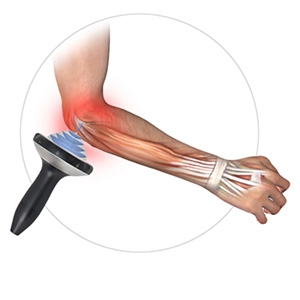
The treatment of epicondylitis (radial / ulnar) with focused shock wave therapy has become an established ESWT treatment option. The use of focused shock waves to treat trigger points associated with epicondylitis has also been shown to further improve clinical outcomes.
STUDIES
Rompe JD, Hopf C, Kullmer K et al. (1996) Analgesic effects of extracorporeal shockwave therapy on chronic tennis elbow. J BoneJointSurg,78-B,233- 237.
Crowther A, Bannister GC, Huma Hetal. (2002) A prospective study to compare extracorporeal shockwave therapy and injection of steroid for the treatment of tennis elbow. JBJS ,84-B,678-679.
Haake, M., Konig, I. R., Decker, T., Riedel, C., Buch, M., and Muller, H.-H. Extracorporeal shock wave therapy in the treatment of lateral epicondylitis: a randomized multicenter trial. J Bone Joint Surg Am 84-A, 11 (2002), 1982-1991.
Speed C, Nichols D, Richards C et al. (2002) Extracorporeal shockwave therapy for lateral epicondylitis: a double blind randomized controlled trial. J OrthopRes,20,895 898.
Mehra, A., Zaman, T., and Jenkin, A. I. R. The use of a mobile lithotripter in the treatment of tennis elbow and plantar fasciitis. Surgeon 1, 5 (Oct 2003), 290-2.
Melikyan EY, Shahin E, Miles K et al. (2003) Extracorporeal shockwave therapy for tennis elbow. A randomized double-blind study. JBJS,85-B,852-855.
Rompe JD, Decking J, Schoellner C et al (2004) Repetitive low energy shockwave treatment for chronic lateral epicondylitis in tennis players. Am J Sports Med, 32,734743.
Buchbinder, R., Green, S. E., Youd, J. M., Assendelft W. J. J., Barnsley, L., and Smidt, N. Shock wave therapy for lateral elbow pain. Cochrane Database Syst Rev, 4 (2005), CD003524.
Lebrun, C. M. Low-dose extracorporeal shock wave therapy for previously untreated lateral epicondylitis. Clin J Sport Med 15, 5 (2005), 401-402.
Chung B, Wiley JP, Rose MS. (2005): Long-term effectiveness of extracorporeal shockwave therapy in the treatment of previously untreated lateral epicondylitis. Clin J Sport Med. 2005 Sep;15(5):305-1.
Pettrone F, McCall B (2005) Extracorporeal shockwave therapy without local anaesthesia for chronic lateral epicondylitis. JBJS, 87-A,1297-1304.
Spacca G, Necozione S, Cacchio A (2005) Radial shockwave therapy for lateral epicondylitis: a prospective randomized controlled single-blind study. Eur Med Phys, 41,17- 25.
Radwan, Y., Elsobhi, G., Badawy, W., Reda, A., and Khalid, S. Resistant tennis elbow: shock-wave therapy versus percutaneous tenotomy. Int Orthop 32, 5 (2008), 671-7.
Staples MP, Forbes A, Ptasznik R, Gordon J, Buchbinder R (2008):A randomized controlled trial of extracorporeal shockwavetherapy for lateral epicondylitis(tennis elbow).J Rheumatology,2008;35:10;2038-46.
Ozturan, K. E., Yucel, I., Cakici, H., Guven, M., and Sungur, I. Autologous blood and corticosteroid injection and extracorporeal shock wave therapy in the treatment of lateral epicondylitis. Orthopedics 33, 2 (Feb 2010), 84-91.
Vural M, Diracoglu D, Erhan B, Gunduz B, Ozhan G, Pekedis K. Efficacy of extracorporeal shock wave therapy and ultra- sound treatment in lateral epicondylitis: A prospective, randomized, controlled trial. Annals of Physical and Rehabilitation Medicine. 2014;57: e190.
Thiele S, Thiele R, Gerdesmeyer L. (2015): Lateral epicondylitis: this is still a main indication for extracorporeal shockwave therapy. Int J Surg. 2015 Dec;24(Pt B):165-70. doi: 10.1016/j.ijsu.2015.09.034. epub 2015 Oct 9. review.
Vulpiani MC, Nusca SM, Vetrano M, Serena Ovidi S, Baldini R, Piermattei C, Ferretti A, Saraceni VM (2015): Extracorporeal shock wave therapy vs cryoultrasound therapy in the treatment of chronic lateral epicondylitis. One year follow up study. Muscles, Ligaments and Tendons Journal 2015;5 (3):167-174.
Taheri P, Emadi M, Poorghasemian J. (2017): Comparison the Effect of Extra Corporeal Shockwave Therapy with Low Dosage Versus High Dosage in Treatment of Patients with Lateral Epicondylitis. Adv Biomed Res. 2017 May 29; 6:61. doi: 10.4103/2277-9175.207148. eCollection 2017.
Wong CW, Ng EY, Fung PW, Mok KM, Yung PS, Chan KM (2016): Comparison of treatment effects on lateral epicondylitis between acupuncture and extracorporeal shockwave therapy. Asia Pac J Sports Med Arthrosc Rehabil Technol. 2016 Nov 24; 7:21-26. doi: 10.1016/j.asmart.2016.10.001. eCollection 2017 Jan.